CBD has garnered enormous interest in recent years. While some people consider it a supplement for their wellness routine, others still have doubts about its safety, its potential benefits, or even if it produces the same effects as marijuana.
Much of that confusion is due to the amount of contradictory information circulating on the internet. It's common to find everything from exaggerated claims that present CBD as a cure-all, to myths that automatically associate it with recreational cannabis use. That's why it's so important to discuss the myths and truths about CBD calmly, with education, and in simple terms. CBD shouldn't be seen as something magical. Nor should it be seen as something bad just because of its origin.
Reality is at a much more balanced point. CBD has been widely studied and it continues to be the subject of scientific research, but it is also important to understand its scope, limitations, and the importance of choosing quality products.
In this guide, we review some of the most common myths about CBD, what the scientific evidence says so far, and what aspects to consider before incorporating it into your routine.
What is CBD really?
Cannabidiol, known as CBD, is one of the many natural compounds present in the plant Cannabis sativa. It belongs to a group of substances called cannabinoids, which also includes THC.
Although they both come from the same plant, they serve different functions and do not produce the same effects.
THC is primarily responsible for the psychoactive effect associated with recreational cannabis. CBD, on the other hand, it doesn't have that effect and therefore, it has sparked interest as an ingredient in wellness-oriented products.
In recent years, the CBD has been the subject of numerous investigations to better understand how it interacts with the body and what its applications might be. Even so, it is important to distinguish between available scientific evidence and claims that often circulate without support.
Myths and truths about CBD:
CBD makes you high.“
One of the biggest myths is that CBD makes you high. Many people hear the word cannabis and immediately think of marijuana, intoxication, or loss of control.
The truth is that CBD is not the same as THC. CBD is not designed to cause that psychoactive effect that many people associate with recreational cannabis.
This doesn't mean that any product on the market is the same. That's why you need to check the label, know the type of extract, and buy products from reputable brands. A product can be CBD isolate, broad-spectrum, or full-spectrum. Each type can have a different composition.
That's why, more than being afraid, the right thing to do is to ask, read, and learn. CBD should not be conflated with THC. They are different compounds and should be understood separately.
2: “CBD is addictive”
Another common mistake is thinking that CBD causes addiction because it comes from cannabis.
To date, the available scientific evidence does not support that claim. The The World Health Organization indicated that CBD does not present effects that suggest potential for abuse or dependence in humans.
That doesn't mean it should be used without discretion.
As with any supplement, it's important to follow the directions for use, be aware of its concentration, and consult with a healthcare professional if you have pre-existing conditions or are undergoing medical treatment.
The best decision is always an informed decision.
3: “CBD cures any illness”
This is one of the most misleading messages that can be found about CBD.
Although there is promising research in various areas, CBD should not be presented as a universal cure not as a substitute for medical treatment.
Cannabinoids have been studied for their potential role in issues related to pain, anxiety, sleep, inflammation, and other conditions. However, the existence of research does not mean that all CBD products are medications or that they produce the same results in everyone.
One example is that The FDA has approved a medication made with purified CBD. to treat certain specific types of epilepsy. However, that approval corresponds to a medication developed under strict clinical studies and does not mean that all CBD oils or supplements available on the market have the same uses or results.
When a brand promises that CBD cures diseases or guarantees results, it's wise to be cautious. Science continues to advance, but there are still many questions that remain under investigation.
4: “Since it comes from cannabis, it must be bad.”
For decades, the word cannabis was associated almost exclusively with recreational use. That perception has led many people to believe that any compound originating from this plant is necessarily harmful.
Reality is more complex.
Cannabis contains hundreds of different natural compounds. Some have psychoactive effects, while others, like CBD, have distinct characteristics and have aroused scientific interest precisely because they do not share those effects.
Understanding that difference helps set aside prejudices and analyze each compound separately.
More than focusing solely on the product's origin, it's important to evaluate aspects such as its composition, concentration, manufacturing process, and the information the manufacturer provides about its quality.
CBD can help with pain.“
Pain is one of the main reasons many people are interested in CBD. Whether it's muscle discomfort, physical exertion, tension, or chronic pain, it's common to find information presenting CBD as a possible alternative.
What does science say?
Cannabinoids have been studied for years for their potential relationship with pain management. A report from the National Academies of Sciences, Engineering, and Medicine of the United States found evidence that cannabinoids may help reduce chronic pain in some adults.
However, that finding does not mean that any CBD oil will produce the same results or work the same for everyone.
Pain can have multiple causes and requires an individualized approach. When dealing with persistent or intense discomfort, it is most recommended to consult with a healthcare professional to receive an accurate diagnosis.
CBD can be part of a wellness strategy for some people, but it should not be presented as a universal solution.
“If it's natural, it's completely safe.”
It's easy to assume that a product of natural origin poses no risks, but that idea is also a myth.
As with many supplements and medications, CBD can cause side effects or interact with other treatments.
Among the effects described in clinical studies are drowsiness, changes in appetite, diarrhea, and weight variations. It has also been observed that high doses can affect certain liver enzymes, especially in specific medical contexts.
This does not mean that CBD is unsafe.
It means that it should be used responsibly and with the same caution as any other supplement.
If you are pregnant, breastfeeding, taking medication, or have a medical condition, it is recommended to consult with a professional before incorporating CBD into your routine.
What science continues to investigate
One of the most interesting aspects of CBD is that research continues to advance.
Currently, there are studies on its possible role in areas such as:
However, not all evidence has the same level of support.
Some studies are conducted on humans, while others correspond to research on animals or cell cultures. The latter help to better understand certain biological mechanisms, but they do not allow us to conclude that a product will produce the same results in humans.
For example, there is preclinical research on other cannabinoids like CBG and CBC in cell lines related to certain types of cancer. Although these studies are promising for the scientific community, they do not mean that a CBD oil cures cancer nor do they justify making those kinds of claims.
The difference between preliminary research and clinically proven treatment is fundamental.
That's why it's important to be wary of any product that promises guaranteed results or presents CBD as a cure for diseases.
The Value of Scientific Evidence
Science rarely provides definitive answers overnight.
Knowledge about CBD has grown considerably over the past decade and will likely continue to evolve as new quality studies emerge.
This means that some questions already have solid evidence, while others still require further research.
Making decisions based on reliable information—rather than myths or exaggerated expectations—is the best way to take advantage of what is currently known about CBD.
How to Choose a CBD Product with Confidence
Product quality is just as important as the CBD it contains. Two oils may list the same amount of cannabidiol on their labels, but differ significantly in their manufacturing process, purity, or quality controls.
Before making a purchase, it's worth reviewing a few basics.
Check the concentration
The label must clearly indicate how many milligrams of CBD the package contains and, preferably, how much is in each serving.
This information allows for proper product use and objective comparison of different options.
2. Know the type of extract
Not all products contain the same type of CBD. You will generally find three categories:
- CBD isolate: contains only cannabidiol.
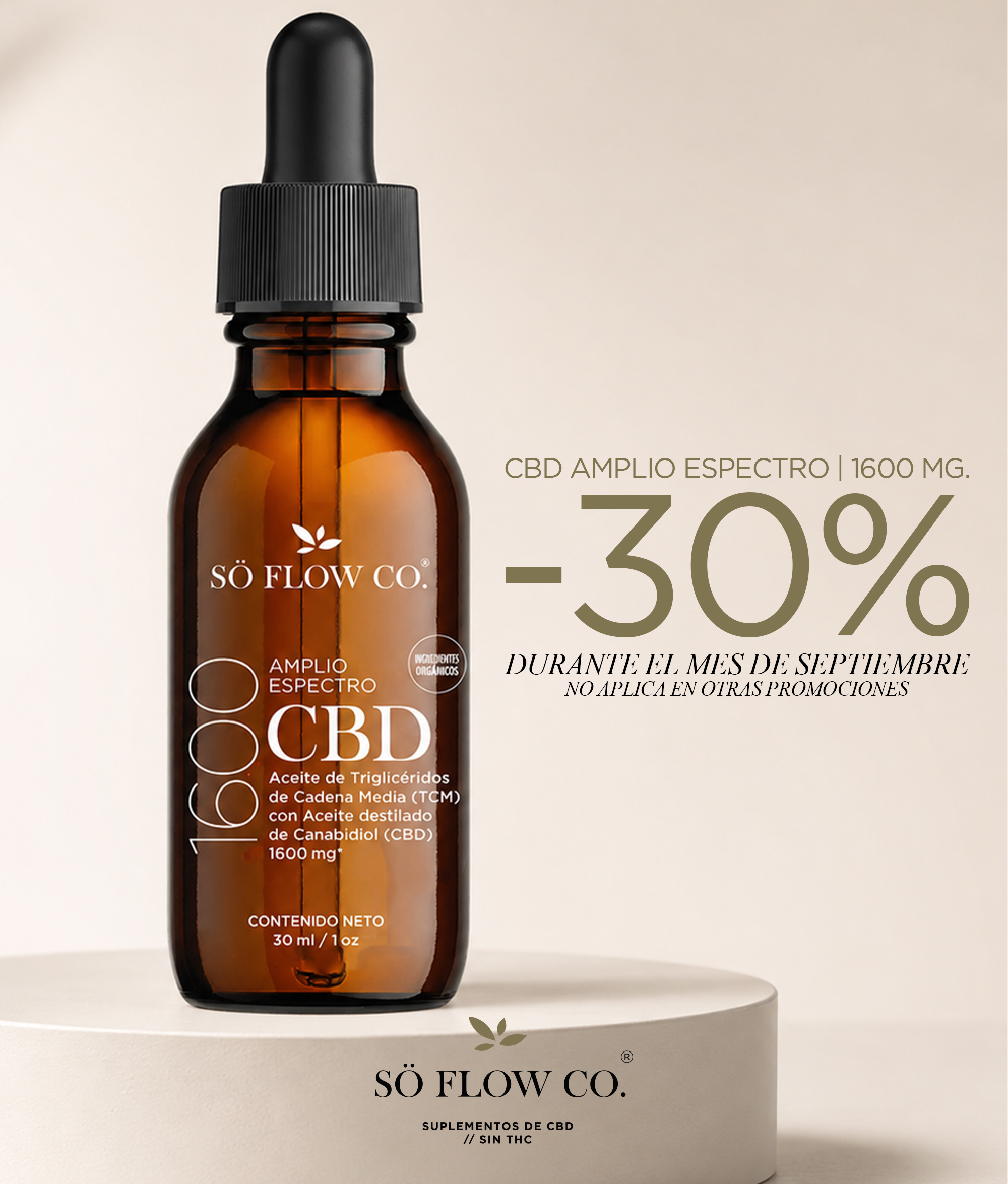
- Broad-spectrum CBD (Broad Spectrum) It contains other cannabinoids and natural compounds found in hemp, but no detectable THC.
- Full Spectrum CBD: retains a wider spectrum of cannabinoids and terpenes present in the plant, including very small amounts of THC within legal limits where applicable.
Each option meets different preferences and needs, so it's advisable to understand their characteristics before deciding.
3. I chose transparent brands
A serious company explains clearly:
- What does the product contain?.
- How should it be used.
- What concentration does it offer?.
- What ingredients does it include?.
In addition, avoid promising miraculous results or making medical claims that lack scientific support.
4. Look for information about quality
The U.S. Food and Drug Administration (FDA) has indicated the importance of paying attention to quality, labeling and the claims some CBD products make. Also remember that many of these products have not been evaluated for the uses they advertise.
Therefore, before buying, it is recommended to research the brand and verify that it offers clear information about its processes and quality standards.









 English
  Español